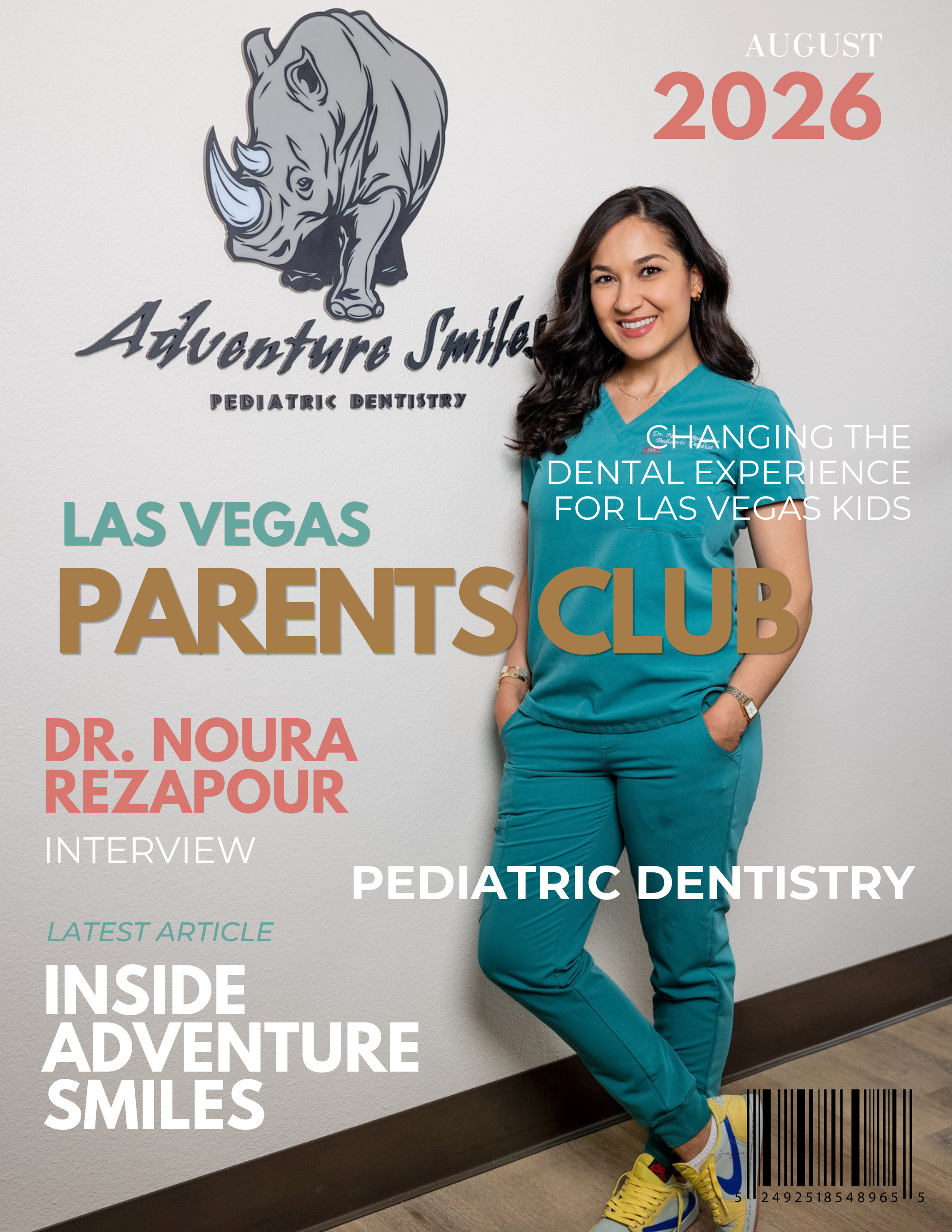
Dr. Noura is a pediatric dentist dedicated to helping Las Vegas children build healthy smiles and positive relationships with dental care from an early age.
For some kids, a trip to the dentist is no big deal. For others, the sights, sounds, unfamiliar people and expectations that come with a dental appointment can feel like a lot. At Adventure Smiles Pediatric Dentistry, the goal is to make that experience a little different.
This Las Vegas practice, which cares for children and adolescents through age 18, has created an environment specifically designed with young patients in mind. The remodeled office has a safari theme, a small play and reading area, safari murals in the dental rooms, stuffed animals and plenty of greenery. It is a setting that feels intentionally different from the traditional dental office.
The environment is only one piece of the philosophy behind Adventure Smiles. For Dr. Noura, pediatric dentistry is an opportunity to influence how children feel about oral health from the very beginning.
She recalls, “I was drawn to pediatric dentistry because it combines my love for dentistry with the opportunity to make a positive impact early in a child’s life. A child’s first dental experiences can shape how they feel about oral health for years, and I wanted to create an environment where children feel safe, comfortable, and even excited to visit the dentist.”
It starts with trust.
“What I love most is building trust with each child and watching their confidence grow. Every child has a unique personality, and finding the special approach that helps them feel comfortable is incredibly rewarding. Of course my patients’ funny stories and little hugs make it even better!”
When Every Child Needs a Different Approach
Adventure Smiles sees a large population of children with special needs, including children on the autism spectrum. For these patients, a successful dental appointment may look very different from what a parent might traditionally expect.
“I’ve learned that there is no one-size-fits-all approach. Every child has different needs, triggers, and ways of communicating, so a successful visit begins with listening to the parents and getting to know the child.
Sometimes the changes are small. Reducing noise. Allowing extra time. Introducing instruments slowly. Scheduling an appointment earlier in the day.
Most importantly, success does not always mean completing every part of the appointment in one day. Sometimes success is simply sitting in the dental chair, opening for an exam, or leaving with a positive experience.”
That shift in perspective can be important for families who have had difficult dental experiences in the past.
Dr. Noura continues, “Patience, flexibility, and celebrating those small victories help build trust and make future visits easier for the child and their family.
When necessary treatment cannot be completed comfortably through those approaches alone, Adventure Smiles also offers oral conscious sedation in the office or general anesthesia when appropriate.
This allows us to tailor care to each child’s individual needs while keeping their comfort and safety our highest priorities.”
Baby Teeth Are Doing More Than You Think
There is a familiar piece of parenting wisdom that deserves a second look: They're just baby teeth.
Not so fast…. “The biggest misconception I hear is, ‘They’re just baby teeth, they’re going to fall out anyway.’ Baby teeth are actually very important for chewing, speech development, confidence, and holding space for the permanent teeth growing underneath them.”
Those primary teeth have a job to do while a child's mouth develops. They help children eat, contribute to speech development and maintain the space needed for permanent teeth. Plus, cavities in baby teeth aren't something to simply wait out.
“Cavities can progress quickly in children, causing pain, infection, difficulty eating, and even damage to the developing permanent teeth.”
The takeaway is straightforward: keeping baby teeth healthy isn't just about protecting the smile a child has today. It helps create a stronger foundation for the smile and oral health they will have later.
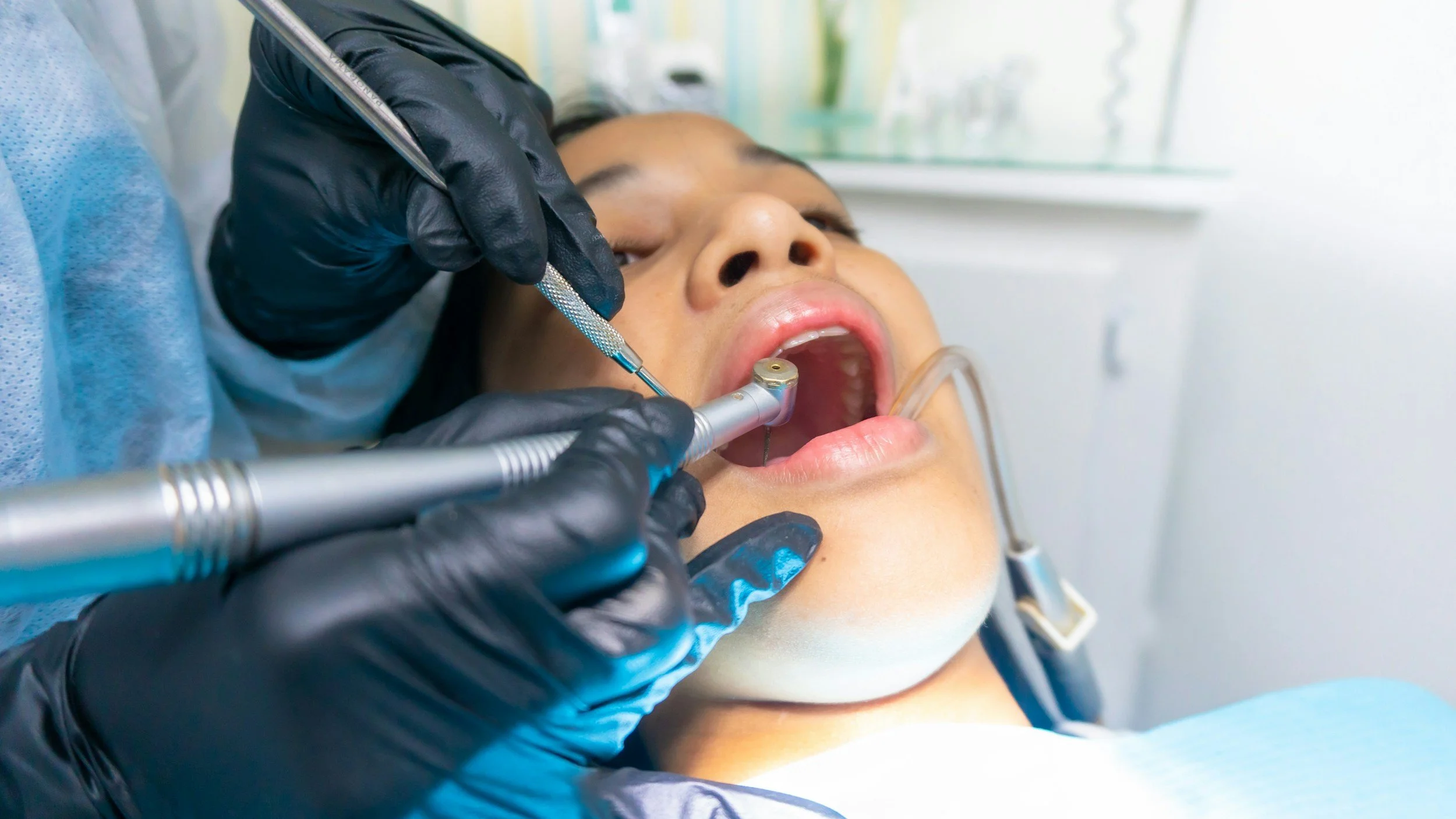
Tongue Ties and Lip Ties: What Should Parents Watch For?
Tongue ties and lip ties are another area where parents may have questions, particularly when feeding, speech or oral function seems to be an issue.
The signs can look different depending on a child's age.
“In infants, parents may notice difficulty latching, clicking during feeding, milk leaking from the mouth, unusually long or tiring feedings, poor weight gain, or persistent discomfort for the breastfeeding parent.
For older children, possible signs can include limited tongue movement, difficulty lifting or extending the tongue, challenges managing certain foods, or trouble producing particular speech sounds.
With a possible lip tie, parents may notice difficulty achieving a comfortable feeding seal or challenges brushing around the upper front teeth.”
But seeing a prominent frenulum does not automatically mean treatment is necessary.
“Many feeding and speech concerns have other causes, so we evaluate how the tongue or lip actually functions and often collaborate with pediatricians before recommending treatment.”
That distinction is important. The appearance of a frenulum alone isn't the whole picture. Function is what we need to pay attention to.
The Everyday Habits That Can Lead to Cavities
Sometimes the biggest dental issues start with habits that don't seem particularly concerning. One of the most common examples is frequent snacking or sipping throughout the day.
“Parents are often surprised that foods such as crackers, gummies, and dried fruit can cling to the teeth, while juice, sports drinks, and flavored milk repeatedly expose them to sugar.”
Another common culprit is bedtime drinks. “Going to bed with a bottle or sippy cup containing anything other than water is another habit that can quickly lead to decay.”
Brushing habits matter, too. Young children often don't yet have the coordination to thoroughly clean every surface of their teeth, even when they are eager to do it themselves. Busy mornings and bedtime routines can also mean brushing gets skipped.
And then there are the habits that are common in childhood, such as prolonged thumb-sucking or pacifier use, which can affect how teeth and jaws develop.
The goal isn't perfection. “These habits are very common, and our goal is never to make parents feel guilty…it is to identify small, realistic changes that can make a big difference in their child’s oral health.”
When Should Your Child First See the Dentist?
The recommendation from Adventure Smiles and the AAPD is earlier than some parents might expect: when the first tooth appears, and no later than a child's first birthday. This is the standard of care.
Those first appointments aren't necessarily about doing extensive dental work. They're about prevention, education and helping a child become comfortable in the dental environment.
“During the visit, we gently examine the teeth, gums, bite, and oral development, often with the child sitting safely on a parent’s lap.”
The appointment is also an opportunity to talk about brushing, fluoride, feeding and snacking habits, pacifiers, thumb-sucking and preventing dental injuries. A gentle cleaning and fluoride varnish may be provided when appropriate.
Perhaps most importantly, parents get a chance to ask questions before there is a problem that needs to be solved.
Making Brushing Less of a Battle
If you've ever tried to convince a tired child that brushing their teeth is absolutely necessary at 7:42 p.m., you already know that knowing what to do and getting a child to actually do it are two different things.
Dr. Noura's advice is to make oral hygiene predictable rather than optional.
“My biggest tip is to make brushing and flossing predictable rather than optional. Tie it to routines that already happen every day, such as after breakfast and before bedtime, so children know what to expect.”
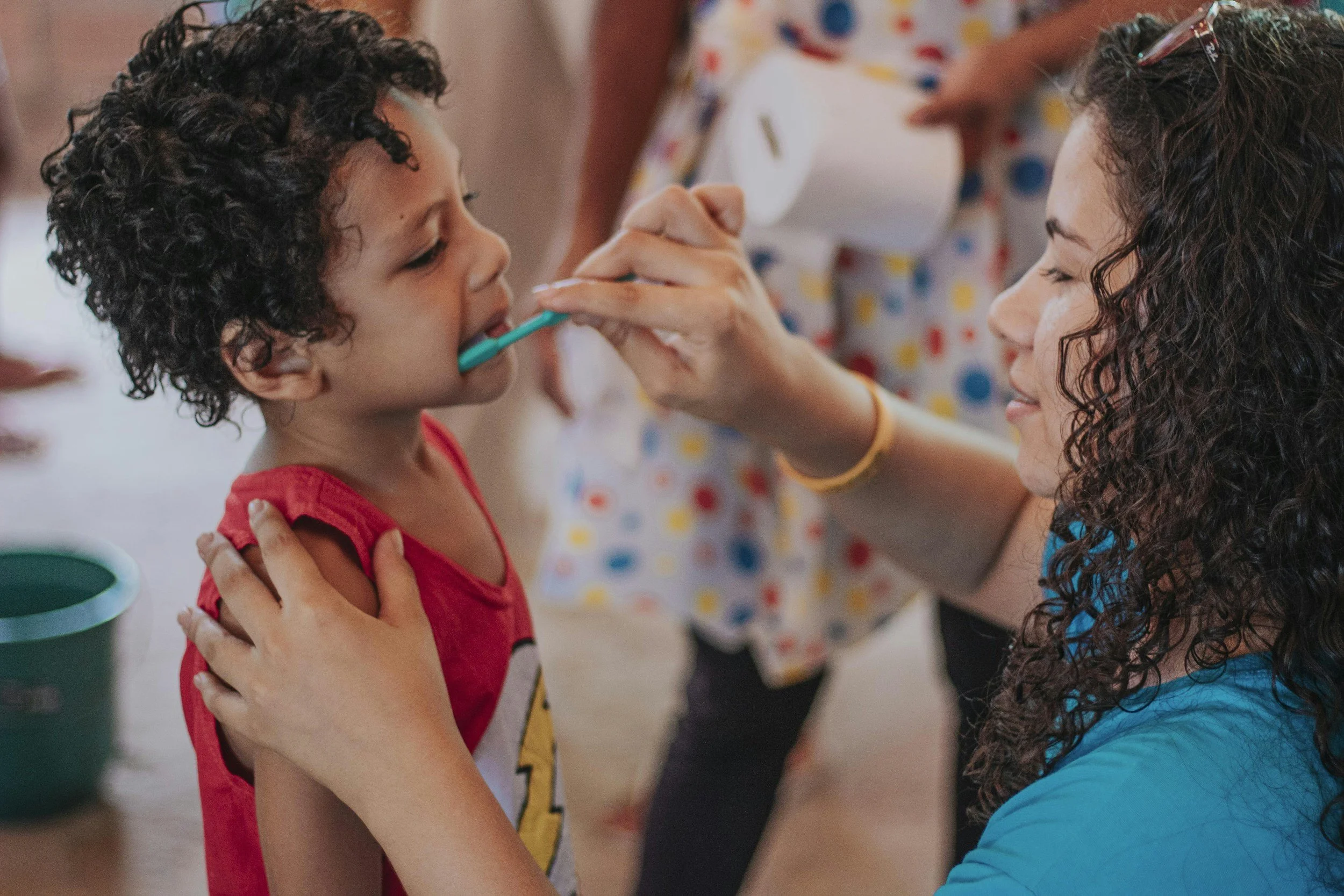
“Giving children small choices can also help. Let them choose the toothbrush, toothpaste flavor or song. They can decide whether they brush before or after putting on pajamas. A two-minute song, visual timer, sticker chart or brushing together as a family can make the routine feel less like another task being imposed on them.
For younger children, there is also the two-turn approach: let the child brush first, then have the parent take a turn to make sure every surface gets cleaned. For children with sensory sensitivities, experimenting with different brush sizes, bristle textures or milder toothpaste flavors may make brushing easier.
Most importantly, stay consistent! Some nights will not be perfect, but repetition is what turns oral hygiene into a normal part of the day.”
A Dental Home on a Safari Adventure
The safari murals, play area and kid-friendly details at Adventure Smiles may be what children notice first. But the larger goal is creating an experience where children feel respected and where parents feel supported.
“Beyond healthy teeth, I hope every child leaves Adventure Smiles feeling safe, proud, and more confident than when they arrived.”
That can mean a child who previously wouldn't sit in a dental chair manages to sit long enough for an exam. Or a child who was nervous about an instrument allows the team to introduce it slowly. Sometimes, simply leaving the office having had a positive experience is progress.
“I want children to learn that the dentist does not have to be scary and that their feelings will always be heard and respected. Even a small accomplishment during an appointment can help build trust that stays with them for years.”
The same philosophy extends to parents. “I also hope parents leave feeling supported rather than judged. Parenting is difficult, and no family’s routine is perfect. Our goal is to provide practical guidance, celebrate progress, and create a dental home where every child, including those who need a little more time, patience, or accommodation, feels welcomed and cared for.”
For families, that's ultimately what a pediatric dental practice can provide beyond clean teeth and checkups: a place where children can learn that taking care of their health doesn't have to be intimidating, and where parents have a team to turn to as their children grow.
Click below to schedule!